


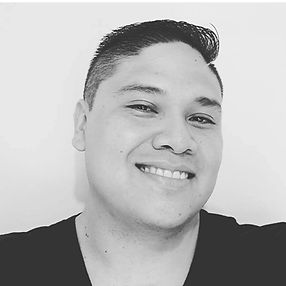
Professional Profile.
My practice is born from a personal manifesto that understands the human being as an eco-existential entity: sensitive, situated, and interdependent. From that root, I operate through an integral framework of being and practice—one that weaves thought, ethics, and action in order to intervene meaningfully in complex systems.
From this foundation, my professional profile unfolds across several operational layers: as a technical contributor, as a team leader, as a strategic director, and as an advisor to C-suite levels. I integrate architecture, design, engineering, human systems, and governance to generate clarity, structure value, and transform urban, institutional, and organizational environments through a multiscalar vision.
My trajectory rests on a simple conviction: complexity can be designed. For more than 15 years, I have worked in territories, institutions, and projects where architecture, engineering, culture, strategy, and humanity converge. I conceive design as a form of thought and as a tool for creating real value—social, technical, economic, and symbolic.
My practice moves between vision and execution: I can imagine futures, but also structure them; I can read systems, but also operate them; I can articulate technical, human, and regulatory layers without losing sight of purpose. From this stance, I build solutions, programs, and projects that demand leadership, analysis, sensitivity, and discipline.
This is the framework from which I define my professional identity.
Executive Profile
I am an architect and transdisciplinary strategist with 15+ years leading projects, organizations, and complex systems across LATAM and EMEA. I operate at the intersection of design, engineering, innovation, governance, and multiscalar strategy—transforming complexity into value, clarity, and measurable results. I align vision, technical precision, and execution in high-impact urban, institutional, and corporate projects.
Trajectory
My trajectory began at UNAM, in an environment where academic rigor coexisted with the rawness of construction sites, territorial analysis, and the social responsibility of architecture. There I understood that design is not an isolated act but a way of reading the world. In my early years I balanced academic work with construction practice, technical drawing, and surveys that taught me to see before imagining, and to build before theorizing.
Architectural drawing was my first true discipline: a language to order thought, a method to understand structures, materials, atmospheres, and spatial relationships. That sensitivity solidified on site—through supervision, adjustments, details, finishes, and the daily resolution of problems that never appear on plans.
I later joined road and highway infrastructure projects (SEMEX), where technical order, industrial rhythms, territorial management, and precision in construction sequencing expanded my ability to understand large-scale systems. Linear infrastructure—with its logistical complexity and territorial impact—strengthened in me an operational clarity that would become essential.
Over time, different firms and organizations allowed me to complete the picture: architectural design, coordination, fabrication, private construction, remodeling, interiors, client processes, supplier relations, market limits, and the frictions of real operations. This period became my transversal formation: every project added a distinct piece to the puzzle of the built environment.
Around 2017, I began an academic cycle that expanded and reconfigured my practice. The specialization in Industrialized Systems trained me in modular construction, materials engineering, and economic-operational models for scalability. I came to understand architecture not only as form, but as a productive, logistical, and financial system.
I later pursued a Master’s in Industrial Design, where I developed a strategic approach that integrates resilience, biomimicry, disaster risk reduction, innovation, complex systems, and business models. This period connected design, engineering, operations, technology, and financial analysis into a single framework. It was an intellectual leap that transformed my perspective—from architect to designer of systems capable of operating across multiple scales.
This period reshaped my approach entirely and consolidated the conceptual and operational base that later enabled me to work in high-demand institutional projects.
With this technical and conceptual foundation, my practice evolved toward institutional and high-complexity projects—including military and naval infrastructure—where precision, strict regulation, interdisciplinary coordination, and operational responsibility define every decision. Here I consolidated my ability to navigate governance frameworks, lead heterogeneous teams, and transform dispersed visions into clear operational structures.
In parallel, I developed my own conceptual frameworks—Urban Tapestries, Polyphonic Denver, Babel—where urbanism, semiotics, resilience, governance, and multiscalar design converge. These frameworks have been applied to international competitions, urban strategies, innovation programs, research, and territorial development. They are not only my way of thinking—they are my way of producing clarity in complex problems.
Throughout more than 15 years, I have led initiatives of up to 80,000 m², coordinated multidisciplinary teams, managed budgets exceeding MXN $1.5 billion, and collaborated with institutions, governments, developers, and organizations that require integrating vision, technique, ethics, and strategy.
Today, my practice operates at the point where vision, execution, and governance meet. I design projects, programs, and systems that balance technique, culture, humanity, and purpose—always seeking to create clarity, value, and a sustainable future.
Operational Layers of My Practice
(Partial or Full-Scope)
AR → CD → SD → DD/CD → PC → CA
.
Applied Research (AR)
My practice begins with deep observation and multiscalar analysis. I explore territories, cultures, markets, material ecologies, production models, and human behavior to uncover hidden patterns and articulate the operational DNA of each project.
En esta etapa, traduzco complejidad en conocimiento táctico: insights, marcos de decisión, escenarios y estructuras que permiten tomar decisiones con precisión desde el inicio.
.
.
Concept Design (CD)
Here is where vision takes form. I build conceptual narratives, typologies, spatial models, programmatic strategies, semiotics, and atmospheres that guide the project’s direction. My approach synthesizes engineering, culture, ecology, aesthetics, human experience, and institutional strategy to generate both symbolic and operational clarity. The concept is not stylistic—it is a technology of meaning that organizes everything that follows.
.
.
Schematic Design (SD)
In this phase, vision becomes early architecture. I translate the concept into a clear spatial structure: plans, massing, circulations, functional diagrams, preliminary technical criteria, program–site relationships, and the first decisions regarding structural and construction systems. The schematic design is the bridge between idea and system: it is where viability is calibrated, risks are anticipated, and the project’s technical, economic, and regulatory foundations are established. This is the space where the structural truth of the vision is tested.
.
.
Detailed Design / Construction Documents (DD/CD)
Architecture becomes a complete, integrated system. I align disciplines, consolidate technical, regulatory, and operational criteria, and transform complexity into precise, structured information. Deliverables become instruments of governance: documents that provide clarity, reduce friction, and sustain continuity. Every line is a decision; every note is a piece of strategy. Together, they form an architecture of order capable of guiding institutions, teams, and territories through time.
.
.
Preconstruction (PC)
Here I secure cost, schedule, quality, and logistical viability. I develop matrices, estimates, critical paths, sequencing strategies, work packages, dashboards, and coordination models designed to foresee challenges and optimize resources. My approach consolidates engineering, process design, regulatory frameworks, suppliers, risk intelligence, and operational strategy. This phase safeguards the client—and the project—against uncertainty and systemic friction.
.
.
Construction Administration (CA)
Materialization demands precision, discernment, and leadership. My role is to ensure that construction stays aligned with design intent, budget discipline, schedule integrity, and the project’s deeper purpose. I orchestrate contractors, resolve contingencies, protect quality, and safeguard the architectural meaning throughout the pressures of execution. Construction is not merely the final phase—it is the moment where vision, rigor, and truth must coincide.
.
Sector Expertise
Markets and Architectural & Design Typologies
Luxury, Bespoke, and Boutique Spatial Experiences
I design intimate, precise architecture tailored to people, institutions, and brands seeking identity, care, and detail. These environments elevate materials, light, emotional ergonomics, and contemporary craftsmanship to create singular, sensorial, and profoundly human experiences.
Tourism, Hospitality, & Wellness
I design spatial experiences for contexts where architecture becomes refuge, atmosphere, narrative, and regeneration. My work spans coastal environments, hospitality, cultural tourism, wellness, holistic spaces, and urban destinations that must integrate identity, operations, climatic comfort, and emotional resonance. From boutique hotels to coastal masterplans, I create projects that not only host—but care, transform, and leave memory.
Institutional and Educational Projects
I design educational and institutional spaces as platforms for learning, collaboration, and service. From campuses and schools to training centers and public buildings, I work with ergonomics, accessibility, circulation, and daily operations to ensure healthy and efficient environments. I create institutional architecture that blends technical rigor with social purpose: spaces that build citizenship, sustain knowledge, and support academic and community life—environments that demand quality, clarity, and the capacity to endure intensive use and critical operation.
Healthcare Spaces and Medical Infrastructure
I design environments where architecture directly affects life, hygiene, and safety. I work on hospitals, clinics, outpatient facilities, operating rooms, ICUs, and imaging suites, integrating clean/dirty flows, specialized HVAC, differential pressure systems, clinical ergonomics, and sanitary materials. Every decision responds to both technical and human standards, creating efficient, reliable, and dignified spaces that support medical operations as well as the wellbeing of patients and staff.
Advanced Industry and Technical Manufacturing
I design industrial plants and environments where flow, ergonomics, and precision define the architecture. From clean processes to high-specialty manufacturing, these spaces require thermal control, clear logistics, safety, resilient materials, and operational efficiency. I conceive industry as a living ecosystem where design and engineering intertwine to enable productivity, safety, and sustained competitiveness.
Design for Resilience, DRR, and Climate Adaptation
I design for risk reduction, climate adaptation, and territorial continuity through a multiscalar framework that blends science, engineering, systems thinking, and futures research. From urban hydrology to resilient and adaptive infrastructures, my work addresses extreme events, socio-environmental vulnerability, and long-term planetary change. I develop strategies and spatial systems that anticipate evolving scenarios, protect communities, and ensure that territories—and the life they hold—can endure, regenerate, and thrive with dignity and ecological intelligence.
Iconic, Cultural, and Nation-Branding Design & Architecture
I develop projects where detail, identity, and sensitivity are fundamental.
Intimate, bespoke architectures crafted with deep symbolic and aesthetic intention—conceptual attire, refined technique, and an uncompromising level of care.
Residential — Habitat & Housing
I design next-generation mobility hubs where people, systems, and territories interact as an integrated urban network. Terminals, intermodals, and logistics nodes require adaptive spatial frameworks, legible flows, universal accessibility, secure operations, and precise temporal performance. My work blends transport engineering, user-centered mobility, data-informed planning, and urban resilience to create environments that anticipate movement and simplify orientation. Each hub becomes a strategic interface—connecting city, infrastructure, digital systems, and everyday life while enabling the transition toward more regenerative, multimodal, and human-centered mobility ecosystems.
Culture, Entertainment, and Creative Venues
I develop museums, cultural centers, theaters, performance venues, libraries, and aquariums where human experience becomes content. My work combines technical rigor, museography, narrative, atmosphere, and specialized operations to uphold culture and collective expression. These spaces require precision, sensitivity, and spatial clarity; I conceive them as environments that preserve memory, spark imagination, and reinforce cultural identity with depth and coherence.
Science, Biotechnology, and Research Laboratories
I design spaces where precision, biosafety, and scientific operations guide every decision. BSL-1/2/3 laboratories, pharmaceutical environments, applied research facilities, and technical infrastructures require environmental control, calibrated flow, sterilizable materials, and structures that ensure safety and efficiency. I conceive these environments as instruments of knowledge—architecture that regulates risk, organizes processes, and enables discovery, innovation, and highly specialized technical work.
Transportation, Multimodal Hubs & Terminals
I design mobility hubs where people, systems, and territories intersect at operational scale. Terminals, intermodal facilities, and logistics centers demand spatial hierarchy, legible flows, universal accessibility, safety, and precise service timing. My work integrates transport engineering, user experience, operational planning, and urban resilience to create environments that enable efficient movement and intuitive wayfinding. Each node becomes a strategic hinge—linking city, infrastructure, mobility, and everyday life.
Applied Research + Product–Service–System Design
(Industrial Design & Technology)
I develop products, services, systems, and applied technologies for the built environment. From biomaterials and modular components to urban elements and spatial interfaces, my practice brings together industrial design, engineering, innovation, and strategic thinking to create scalable, sustainable, and high-impact solutions.
Real Estate & Property Development (CRE/RE)
I operate within real estate ecosystems where technical feasibility, financial performance, and strategic vision must align. I design residential, commercial, and corporate products by integrating typological mix, TCO and lifecycle metrics, asset operations, market positioning, and long-term ROI. My practice blends design intelligence, territorial strategy, prefabrication, and business modeling to create assets that are not only viable, but resilient, distinctive, and future-ready—projects that generate durable value across economic, social, and spatial dimensions.
Corporate, Workplace, and Organizational Culture
I design workplaces that structure culture, governance, productivity, and wellbeing. My approach brings together cognitive ergonomics, organizational behavior, strategic interior architecture, and operational systems to create environments that align teams, workflows, and institutional vision.
Retail, Commercial and Experiences.
I create environments where brand identity, operational flow, ergonomics, and spatial experience converge as a single system. Through sensory UX, atmospheres, regulatory clarity, and logistical intelligence, I design stores, commercial environments, and replicable concepts that elevate narrative while delivering efficiency and operational precision.
Government, Infrastructure, and Urban Equipment
I develop projects for public agencies, sensitive infrastructure, civic space, and programs where technical precision, regulation, and social responsibility must converge. My approach combines governance, territorial planning, universal accessibility, and frameworks for spatial transparency.
ESG, Urbanism, and Landscape Architecture for Territorial Regeneration
I design urban strategies that weave ecology, everyday economies, climate resilience, mobility, materiality, and local culture into cohesive systems. This work integrates planning, ESG metrics, spatial justice, and neighborhood models to shape regenerative urban ecologies that sustain community life.
Urban Food Systems, Agroecology & Socio-Ecological Infrastructure
I design strategies and spatial ecologies that weave food systems, territory, climate resilience, and regenerative infrastructure into a unified framework. My work engages urban food networks, agroecology, metabolic flows, and socio-ecological systems to envision cities capable of adapting to shifting environmental conditions. I develop multiscalar solutions linking water, energy, biodiversity, local production, logistics, and collective operations—conceiving these systems as vital infrastructure, from city to planetary scale: a living matrix that sustains life, reduces systemic risk, and enables cities to evolve in just, regenerative, and resilient futures.
Value Proposition
My professional value emerges from the ability to navigate complexity with discipline, sensitivity, and rigor. I transform diffuse problems into clear structures; reduce uncertainty through deep analysis; translate vision into strategy; and convert strategy into processes, solutions, and systems that generate real impact.
I design decision architectures, collaboration models, operational frameworks, and narratives that enable teams to coordinate, stakeholders to align, and organizations to accelerate results. My approach blends technical clarity, systems thinking, aesthetic sensitivity, human understanding, and executive rigor.
I am a transdisciplinary strategist who designs, orchestrates, and delivers complex systems.
My practice integrates architecture, engineering, strategy, art, and science to transform territories, institutions, and urban environments into structures that are clear, coherent, and capable of evolving.
I work through seven forces that define how I operate:
1. Multiscalar Logic — from detail to territory.
I understand and design systems that span objects, human experience, buildings, campuses, cities, and political–economic territories.
My multiscalar reading connects flows, typologies, climate, infrastructure, governance, operations, and culture into a single decision framework.
2. Transdisciplinarity — I do not join disciplines; I integrate them into one cognitive system.
Architecture, engineering, industrial design, materials science, human systems, economics, urbanism, behavior, narrative, and phenomenology operate as a single ecosystem.
This allows me to solve problems that require synthesis, not silos.
3. Systems Thinking — I design from patterns, not from impulses.
I read technical, human, organizational, and ecological complexity as one organism.
I work with frameworks (Urban Ecologies, Ceschin & Gaziulusoy, Bronfenbrenner, Stability–Flow–Replication, Album Framework, Governance by Design) to generate conceptual solvency and operational coherence.
4. Futures Vision — I design for what is coming, not only for what exists.
I work with speculative design, scenario-building, futures narratives, resilience, and anticipatory governance.
My practice moves between foresight, applied innovation, biomimicry, regeneration, advanced ESG, and models of organizational and territorial transformation.
My projects are embodied futures.
5. Interdisciplinary Orchestration — I synchronize actors, not just teams.
I can lead projects involving 100–500 stakeholders, aligning design, engineering, operations, communities, regulation, investors, brands, and narrative.
I turn divergence into clarity and governance into rhythm.
6. Rigorous Execution — from concept to CAPEX/APU, QA/QC, and operations.
I make vision buildable.
I integrate macro-ergonomics, industrialization, smart materials, commissioning, risk, regulatory compliance, constructability, and energy efficiency into a continuous operational flow.
7. Meaning & Experience — I design from aesthetics, emotion, and symbol.
My artistic practice (acting, scenography, narrative, performing arts) merges with architectural design to create places with identity, atmosphere, and purpose—spaces that serve culture, memory, and human well-being.
Where others see friction, I find patterns.
Where others see chaos, I discover structure.
Where others see limits, I identify possibilities.
I am not a hyperspecialized profile.
I am a hypersynaptic one.
Industries are fragmented; problems are not.
My specialty is to connect disciplines, synchronize actors, translate complexity, and create integrated solutions where design, engineering, operations, and culture converge.
In a world of silos, my advantage is integration.
My work generates value because it weaves the human, the technical, the organizational, and the territorial into a single line of force.
Value Delivery Levels
Capabilities by Tier.
.
Senior / Individual Contributor (IC)
(Technical competence + analysis + synthesis)
At this level, my strength lies in depth: in the ability to analyze complex contexts, synthesize dispersed information, and produce tactical knowledge that supports decision-making. I read territories, systems, users, and structures through a multiscalar lens—from construction detail to socio-spatial patterns—and translate them into precise, conceptually grounded, and technically clear solutions.
My contribution here is rigor, structure, and critical thinking.
.
.
Manager / Coordination (PM / Senior PM)
(integration, articulation, team alignment)
Here I operate as an integrator. I coordinate disciplines, synchronize teams, articulate consultants, and translate vision into clear, actionable processes. I align engineering, design, regulatory requirements, technical feasibility, and business expectations. The value of this level lies in reducing friction, clarifying workflows, ensuring consistency, protecting schedules, and elevating quality throughout execution.
.
.
Director
(Strategy, decision-making frameworks, programs, governance)
As a director, my role evolves toward defining conceptual and strategic frameworks, articulating complex programs, and engaging with key stakeholders. I build narratives, decision criteria, and governance models that enable a project or organization to operate with clarity, cohesion, and a shared vision.
At this level, complexity stops being a problem—it becomes structure, guidance, and strategy.
The impact is seen in reduced uncertainty and in the ability to turn fragments into coherent systems.
.
C-Suite / Executive and Transformational Leadership
(Vision, culture, systems, futures)
At the highest level, my practice becomes transformational. I operate at the intersection of institutional strategy, regenerative systems, organizational culture, and futures design. I activate innovation, build operational models, develop resilience frameworks, and support processes of structural change.
Here, design is no longer a discipline—it becomes a technology of governance, development, and meaning.
The impact becomes systemic: culture, processes, decisions, identity, territory, narrative, and vision.
.
Systemic ROI: The Full Value of My Professional Practice
Economic, operational, human, cultural, environmental, and institutional outcomes generated through multi-scalar leadership and transdisciplinary thinking & design intelligence.
Economic–Financial ROI
– Reduction of Total Cost of Ownership (TCO) through systemic optimization
– Strategic alignment of CAPEX–OPEX for long-term asset performance
– Elimination of rework and variance through governance and precision delivery
– Schedule efficiency and program reliability across the construction lifecycle
– Value Engineering (VE) strategies informed by life-cycle economics and risk analysis
– Maximization of asset value across real estate and infrastructure portfolios
– Productivity gains, operational efficiency, and reduction of systemic loss
Cultural–Symbolic ROI
– Spaces with identity and cultural resonance
– Symbolic and narrative architecture
– Memorable, emotionally anchored experiences
– Nation branding through built environment and spatial storytelling
– Experiential hospitality and atmosphere design
– Aesthetic and strategic coherence across the entire user journey
– Design as a vehicle for brand construction and cultural positioning
Operational–Technical ROI
– Macro-ergonomics and systemic reduction of operational friction across workflows
– Integrated A–MEP–STR coordination as a unified technical governance platform
– High-performance QA/QC and commissioning aligned with compliance, risk, and service continuity
– Operational continuity across high-demand environments (healthcare, campuses, hubs, hospitality)
– Full-cycle governance from feasibility to construction, handover, and long-term operations
– Industrialization strategies, TRL-9 deployment, and integration of smart and advanced materials
– Multisite orchestration ensuring consistency, scalability, and synchronized performance across locations
Environmental–Regenerative ROI
– Reduction of energy footprint through systemic environmental performance
– Climate-responsive design (shade, comfort, wind, courtyards, arcades)
– DRR resilience and risk-informed design strategies
– Sustainable and regenerative material ecologies
– Socio-ecological systems integrated into urban and territorial frameworks
– Mobility and transportation strategies that enhance accessibility and reduce impact
– Territorial regeneration that restores ecological function and strengthens community resilience
Social–Human ROI
– Human experience and well-being as core drivers of spatial performance
– Safer, clearer, and more efficient movement flows across all user groups
– Reduction of spatial and cognitive stress through clarity, legibility, and environmental psychology
– Equity in access, social mix, and spatial dignity as fundamental design principles
– Emotional safety in campuses, hospitals, and public environments through atmosphere, coherence, and behavioral insight
Institutional–Strategic ROI
– Governance by Design as a strategic decision framework
– Multiscalar decision-making systems that align vision, operations, and territory
– Operational transparency as a structure for trust, accountability, and institutional clarity
– Reduction of political and reputational risk through coherent processes and strategic alignment
– Executive narrative as a tool for clarity, influence, and shared vision
– High-level stakeholder orchestration across institutions, communities, investors, and governance bodies
– Futures-driven vision to anticipate scenarios, guide transformation, and enable long-term resilience